Archive for March, 2014

Easy lasagna – gluten free, dairy free, fast and delicious

I grew up in an Italian/American household. The smells of homemade sauce still elicit a salivating response. It’s a food that reminds me of fond memories; comfort and time with family.

Going gluten free these days can be met with ease since there are gluten free replacements available in nearly every grocery store. Gluten free pasta, breads, baked goods, for examples can help fill the void in a country where carbohydrates are of emphasis. Still I try to abstain from refined flours the best we can and find or create menus that focus as much as possible on vegetables as carbohydrates, good fats and protein. I also try to adopt recipes that reduce the stress in my life rather than add to it.

This dish is a score in my books because it meets the needs of above, is ideal for dinner parties and my kids seem to know no difference (bonus!). The name is more complicated than the dish.

Noodle-less, paleo, dairy free, gluten free, vegan lasagna.

Ingredients:
2-3 zucchini
1 cup greens of your choice: Swiss chard or kale
1 eggplant
2-3 sweet potatoes (baked)
Cashews or ground cashews
1tsp nutritional yeast
2 cans organic tomato sauce
Basil, oregano, olive oil, garlic

Prep time: 30 to 40 minutes.
Turn oven on 425f and put whole sweet potatoes on oven baking until they are cooked on the inside. This can be done ahead of time.

Slice zucchini and eggplant longwise.
Ground cashews and mix with nutritional yeast, dash of salt, dash of basil, oregano, diced garlic and water to make a cheese consistency- referred to as cashew cheese)
Fill base layer of baking dish with one layer sliced zucchini. Add tomato sauce to cover the layer. Mix cashew cheese with greens and add as a second layer.

Add a third layer of sliced eggplant ( in a contrasting direction of how you laid the zucchini). Add sauce to cover. Scoop out insides of baked sweet potatoes and mash with fork in a bowl. Add to dish as your 4th layer. Top with last layer of zucchini and finish with sauce and olive oil drizzled. Sprinkle basil and oregano.

Bake at 375 for 45 minutes with a lid. The last 15 minutes without the lid. Let cool then cut into squares. Makes about 12. Serve with a bolognese sauce.

Bon appetite and Salud

Be well,
Lynn

20140330-151841.jpg

The SMART meter violation

Sometimes I feel as though I live in a haze, clear of what I see in front of me and naive to what’s around me.  I just learned that since June 2012 a SMART meter was installed by Southern California Edison on my residential property, entirely unbeknownst to me.  I do not recall ever receiving contact that this instrument would be installed on my property and did not believe that Edison nor any other company would have the right to do so. 

Given my son’s history of seizures, I’ve been extremely conscientious of our decisions to use in our home TV’s, refrigerators, toaster ovens, wireless routers and wireless laptops.  I’ve done my damndest to remediate these waves as much as I can.  I have Qlink stickers on our cell phones (which have demonstrated regulating brain waves)and Aulterra Neutralizer stickers on all of our major appliances.  I know I couldn’t put either of my children in a bubble but I at least felt that I had control over my home environment.  Now I realize that I couldn’t have been more wrong. Somehow the government and its entities had the right to enter on my property and install this health damaging device without my knowledge.  According to the representative I spoke with at Edison, I didn’t have to be informed because they own the machine. 

I’ve been entirely aware of the SMART media potential for radiating harmful EMF’s (electric magnetic frequencies) constantly throughout the day.  Yes, EMF’s are radiated from microwaves (if they were running 24 hours a day) and our cell phones.  Yet the SMART meter radiates at a much higher level; potentially up to 80 times higher than the EPA allowance and it runs constantly 24 hours a day.

I’m equally frustrated by me not being aware of the SMART meter installation in our area. For some naive reason I  thought that perhaps Mammoth was exempt from this invasion and didn’t think the machines had reached our area. I couldn’t have been more wrong. Other counties in California such as Marin and Santa Cruz have denied SMART meters into their towns. They have issued bans and the utility companies have had no other choice but to comply.

Those that oppose the use and implementation of SMART meters base their decisions on information derived from such well researched articles as the  American Academy of Environmental Medicine that states “chronic exposure to radiofrequency radiation is a preventable environmental hazard that is sufficiently well documented to warrant immediate preventative public health action”.  Other well researched papers such as “Getting Smarter about the Smart Grid” argue that there is no intelligence to the design or implementation of these SMART meters.  The article “10 Questions for your Utility Company”  is a great tool for customers to use when discussing with their utility company how SMART meters may affect their health and their utility bill. 

Utility companies argue that the evidence is not sufficient to ban SMART meters.  This reinforces that indeed no time has passed to gauge the long term effects on health and our children. This is a strong enough reason to keep SMART meters off my property and preferably out of my town.

In my personal life and in my nutrition practice, I focus on reducing the total external stress load as much as possible. Then again, I perceive external stressors as those I can control.  In this situation I feel as though my control over my environment is slowly slipping away.

When I contacted Edison I insisted that my SMART meter be removed. They agreed to my request at a $75 one time fee for its removal and $10 per month for maintenance.  Amazing, I have to pay  more to keep my family healthy.

What are your thoughts? Were you aware of their presence? Have you experienced health issues? I’d like to hear from you.

Next blog, I’ll keep it light.  I promise. 

Be well,

Lynn

This OTC pain killer that we all have used can cause ADD and even death

Fox news, CNN, Huffington Post, Time, CBS are reporting the news that is sweeping the nation about the dangers of a drug that all of us have probably had in our medicine cabinets and consumed at one time or another.  Acetaminophin, found in Tylenol and Excedrin, when taken by pregnant mothers, is showing a 37% increase of risk of their children developing ADD.   According to previous research, acetaminophen can disrupt the body’s endocrine, or hormone, system. Exposure to endocrine disruptors in a fetus may effect neurodevelopment and cause behavioral dysfunction.  The exact mechanism of disruption is unclear, but the correlation appears to be strong.

Acetaminophin has been recommended by the doctors in the past to pregnant woman to address fevers or illness as a safer alternative to other pain killers.  Currently the FDA has made no adjustments to Acetominophin’s risks for pregnant women.

Tylenol, namely, has also been under scrutiny in the past year for its failure to advise that in excess doses or in combination with alcohol, it can cause death. The FDA was warned of the potential of Tylenol with liver failure over 32 years ago but has just recently taken notice.  Annually, there have been on average 150 deaths; some affecting the very young as well as the old. 

Per the site WTOP.com, here are  Major Takeaways about Tylenol:

  1. About 150 Americans die a year by accidentally taking too much acetaminophen, the active ingredient in Tylenol, federal data from the CDC shows.
  2. Acetaminophen has a narrow safety margin: the dose that helps is close to the dose that can cause serious harm, according to the FDA.
  3. The FDA has long been aware of studies showing the risks of acetaminophen. So has the maker of Tylenol, McNeil Consumer Healthcare, a division of Johnson & Johnson
  4. Over more than 30 years, the FDA has delayed or failed to adopt measures designed to reduce deaths and injuries from acetaminophen. The agency began a comprehensive review to set safety rules for acetaminophen in the 1970s, but still has not finished
  5. McNeil, the maker of Tylenol, has taken steps to protect consumers. But over more than three decades, the company has repeatedly opposed safety warnings, dosage restrictions and other measures meant to safeguard users of the drug.

According to this report, the FDA has failed to present the risks when the risks were under suspicion decades ago.  It’s disheartening to learn that the drug administration that we as Americans put faith in, is not protecting our people. It’s up to us to spread words of concern.  If you do use Tylenol and know of others that would value this information please share.

Be well,

Lynn

Could there be truth to this?

A dash of humor, a pinch of sarcasm and a whole lot of meaning.

healthhumor

Be well,

Lynn

Daylight Saving time killing your mood?

I have had a heck-uv-a time getting out of bed in the mornings, since Daylight Saving time took effect this past Saturday night.  The same goes for my children.  It’s now taking extra pulls and tugs to get them motivated.  I find it humorous that “saving’ is inherent in the phrase when I’m waking feeling like I’m “losing” sleep.  Is it the one hour advancement in the day that’s creating the adjustment? Perhaps; but we’re going to bed at the same time in the evening as we did prior to Daylight Savings time, so that alone can’t be the issue contributing to our groggy a.m. feelings.

Knowing what I know now about the importance of sleep, I am convinced that the problems that we are having are entirely physiological.  What we are feeling and you may be feeling as well is a jolt to our sleep/wake cycle, also referred to as our circadian rhythm.  Each of us as individuals have our own built in mechanisms to help us regulate sleep and wake time, sort of like a clock, that is largely dependent on natural light (sun) and darkness (nighttime).  The sunlight tells us it’s time to be awake and the nighttime tells us it’s time for sleep.  This in itself is problematic with the “spring forward” theory of advancing our clocks in March.  Now, when I wake in the morning it’s still dark outside, prohibiting my natural sleep/wake cycle to work as effectively as it has. My body is screaming “sleep” until around 7:15 when the sun rises.    So essentially by advancing our clocks, waking in darkness, we are working against nature. 

Other than directing my frustration toward Congress for implementing this law, and for California for going along with it (I had to get my digs in :)) there are a few tools to help your body adjust to the time: light and dark changes.

1.  15 to 30 minutes prior to going to bed, turn off all lights (especially florescent lights).  Light interferes with the body’s built-in manufacturing of the sleep hormone, melatonin.  Candlelight or dimmed lighting is more ideal if you are in need of some light before sleep.

2.  Turn off all electronics 30 minutes prior to sleep and be sure to not store them anywhere near your head.   There is much evidence that EMF’s interfere with our brain frequencies, prohibiting the body’s nighttime efforts to rest and recover from the day.

3.  Set your alarm 10 to 15 minutes earlier in the morning, allowing for you to wake slowly.  Turning on artificial light will stimulate your cycle, advising you that it’s time to wake. 

Hope this all helps.

Be well,

Lynn


How to be prepared for a food emergency

You’re making changes to your diet and are proud of this new adoption and how improved you feel.  You’ve organized your meals as best as you can and then discover you are hungry and have no healthy snacks available.  You want something quick and easy and find that you have little time.  You now have three options:

1.  Run out to the store or fast food place to get something to eat (but that would counteract all of your efforts)

2.  Wait until you have more time to eat (that would deprive your brain of the glucose it’s craving)

3.  Dive into your food emergency bag. 

The latter sounds like the best option and actually is the best option because it gives you the tools you need to stay on track with eating foods that make you feel good and are good for you.   And what should you have in that bag, refrigerator, or purse? Here’s a brief list I’ve put together:

1.  Raw food bars (Larabars, for example)

2.  Nuts packages and seed packets

3. Canned wild salmon

4. Nut butters

5. Apples

6. Beef Jerky

7. Salmon Jerky

8.  Hard boiled eggs

8.  Even some dark chocolate

But I can’t steal the limelight any further. Dr Mark Hyman does that best in describing what should be in your food emergency bag.  You can watch him here

A food emergency bag is necessary whether you are travelling in the car, at an airport, or work out of your home.  It’s great for individuals and for families (my kids dive into the bag before we even leave the driveway!). 

Hope this helps.

Be well,

Lynn


Reduce your stress in 10 minutes or less with little effort

To all of my wonderful supporters and blog followers:

I was sent a free series of three meditations, each 10 minutes in length.  The three meditations are intended to help the individual through meditation, find a place of solace and relaxation.  The meditations also contain messages that reinforce the power of love and can help with self-image.  I did a quick test of the first meditation entitled “Sending Love” and found my shoulders dropping a few notches (I didn’t even know they were raised!). 

Please try out and use repeatedly if you feel they are of benefit to you. 

Here’s the link


I’d also love your feedback if you find yourself listening to them.

Be well,

Lynn

Because of our doings, the monarch butterfly faces extinction

We’ve allowed the genetic modification of foods which have contaminated our soils, depleted our foods of essential nutrients and has created an epidemic of food sensitivities, all contributing to chronic illnesses. We are now facing these realities as we unveil the root sources of dis-ease.

What became surprising to me in an article written recently is that the current agricultural practices of eliminating natural landscape and substituting with gmo grains/ crops is not only catastrophic to our food supply but endangering our ecology. The monarch butterfly lays it’s eggs on the native plant milkweed that for centuries are native to prairies across the nation. But farmers in an effort to increase their revenues are eliminating milkweed to optimize their use of land. Since 1996 the monarch butterfly population has dropped from 1 million to 33 million, a drastic reduction.

You can read the full article here
the plight of the monarch butterflies

It’s imperative as a nation that we give incredible thought to our actions and their outcomes.

A global thought.

Be well,
Lynn

I tested negative for gluten sensitivity so I don’t have one right?

Unfortunately this is a common mis perception. Yes an IgG test can identify certain food sensitivities especially when looking for cumulative chronic low grade inflammation. And I use it often in my practice to help clients identify foods to remove in an effort to reduce inflammation. But an IgG test tests for only one protein portion of wheat. There are actually numerous other proteins and reactions that can and do occur and are not covered by an IgG test. Let me explain.

Transglutimase 2 are the enzymes that are typically measured in an IgG test. This measure identifies antibodies that have developed to protect the body from enzymes used in the digestion of wheat. In other words it measures antibodies in the digestive tract.

Yet there are two other transglutimases: TG3 (antibodies found in the skin) and TG6 (antibodies found in the nervous system) that are not tested for in an IgG test.

Gluten is broken down into gliadin, which is then broken down into alpha, omega , and gamma gliadins. One marker typically tested for is alpha gliadins while the other two are not tested for in an IgG test and can and do create reactions.

Glutenin is the sticky part of gluten and can cause reactions. This also needs to be tested for.

Lastly, deamidated gluten is an acid used by the good processing industry to make wheat more friendly to mix with other foods. This acid has show to create a severe immune response in people. It is not identified in an IgG test.

Fortunately Cyrex lab tests for all of these reactions.

Some other facts about gluten reactivity:
The protein structure of gluten is similar to the protein structures in the nervous system which means when the body creates antibodies against gluten it can begin attacking its own tissue.
The majority of our brain is filled with microglial cells indicating that our brain is loaded with immune cells. Gluten in creating an immune reaction can penetrate the blood brain barrier. The blood brain barrier is designed to keep infections out and allow nutrients in, similar to the intestinal barrier.

If you suffer from chronic pain, foggy thinking, neurological disorders, an autoimmune disease or are symptomatic in other ways it’s necessary to consider removing all wheat from your diet, regardless of an IgG test results. Keep in mind that food can create reactivity up to three days later. Or if you prefer evidence, get tested for all the
exposures mentioned above.

Be well,
Lynn

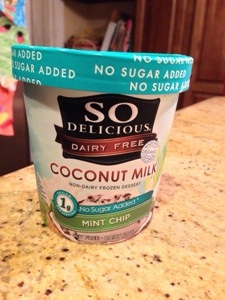
A good fat, low sugar, dairy, soy free ice cream that’s to die for

I’m a sucker for really good ice cream but the brands I used to consume are laden with sugars and dairy, two items I stay away from.

You may be thinking: no dairy and no sugar then what’s in this ice cream? Healthy coconut cream ( full of good fats and anti-inflammatory properties), and natural flavorings such as pure vanilla, or mint, or cocoa (depending on the flavor). The only sweetener it’s filled with is stevia(the plant sweetener that doesn’t play games with your insulin receptors). It even says on the front 1g of sugar.

Must you travel far to buy this incredible find? Nope. I found this one at the freezer at VONs (our local grocery store) so for those that live locally you won’t have to travel far. And for those that live near a plethora of health food stores it will be an easy find.

How much should you eat? This is the best part. It’s full of healthy fats- so it’s good for the brain. It’s an indulgence you don’t have to feel guilty about. I must admit that I do play down its benefits to my children. ‘Ok you can have some but only after you eat your dinner’. Shhh don’t tell 🙂

Enjoy and be well,
Lynn

20140227-131803.jpg